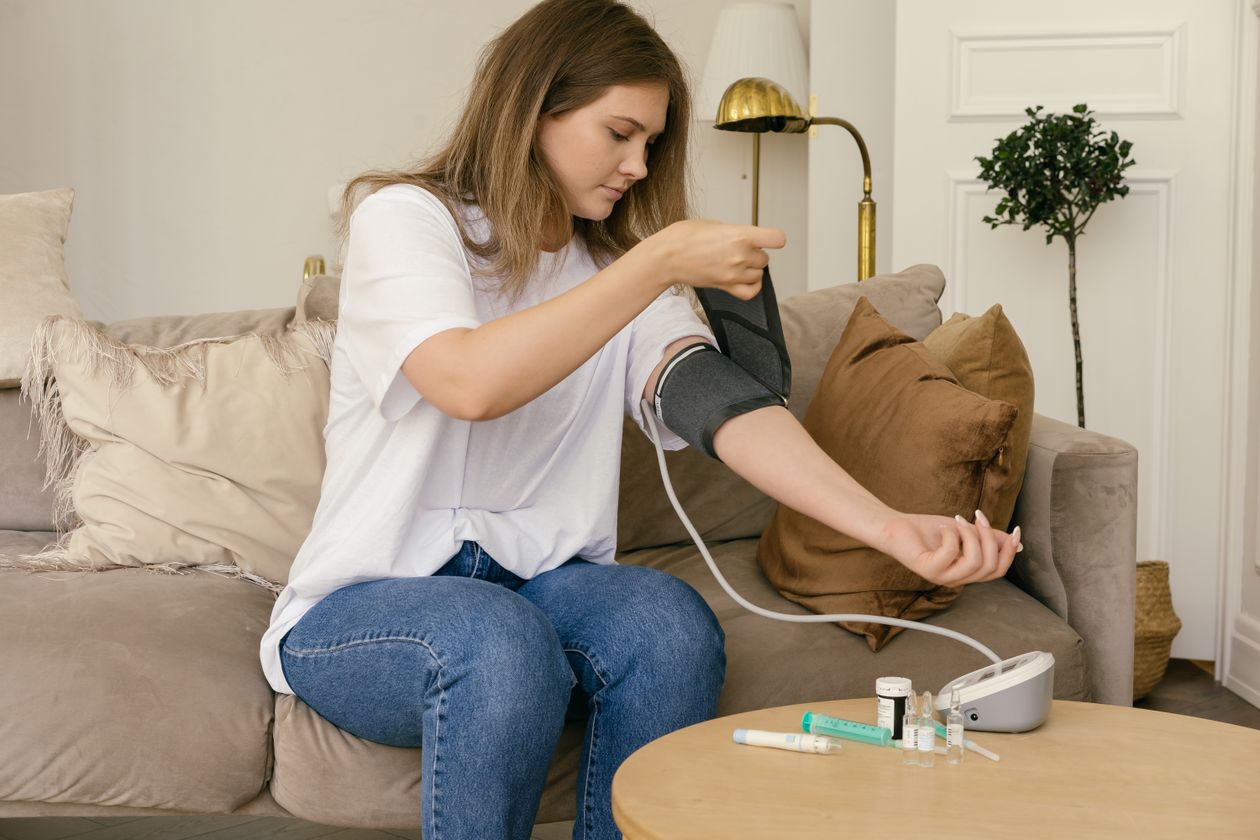
Home Blood Pressure Monitoring: How to Check Your Blood Pressure Accurately
Written by Cherlie Joseph, MSN, FNP-BC · Medically reviewed by Naurah Gaspard, DNP, FNP-C, FNP-BC · Updated November 2026
To check your blood pressure at home accurately, use a validated upper-arm cuff in the right size, sit quietly with your back supported and feet flat for 5 minutes, and take two readings one minute apart at the same time each day. Log every reading and share the average with your provider. The 2025 AHA/ACC guideline recommends home monitoring to confirm a diagnosis and guide treatment.
In this guide
Why home readings matter
A single office reading can mislead. Some people read high only at the clinic (white coat hypertension), while others read normal at the clinic but high at home (masked hypertension). The 2025 American Heart Association and American College of Cardiology guideline recommends confirming high blood pressure with home or ambulatory readings and using home monitoring to track how treatment is working.
Home readings also make online care easier. When you request a blood pressure refill, a week of readings gives your nurse practitioner a much clearer picture than a single number from months ago.
Choosing the right monitor
- Upper arm, not wrist or finger. The American Heart Association recommends an automatic upper-arm cuff. Wrist and finger devices are less reliable.
- Validated. Check the model at validatebp.org, a free list of devices tested for accuracy. Your pharmacist can help, too. If you are pregnant or older, check that the device is validated for that group.
- Correct cuff size. Measure around the middle of your upper arm and match it to the size printed on the cuff. A cuff that is too small reads falsely high; one that is too big can read low. Larger cuffs are often sold separately.
- Skip smartwatches for now. Cuffless wearables are not yet considered reliable enough to diagnose or manage high blood pressure.
Many validated monitors cost less than a month of takeout lunches, and some health plans or HSA/FSA accounts cover them. Prices vary, so compare at your pharmacy or online.
Request a medication refill
$79 refill review by a nurse practitioner licensed in your state. Adults 18+ in FL, NM, OR and WA.
Request a medication refill →Step-by-step: how to take a reading
- For 30 minutes before, skip caffeine, smoking and exercise. Empty your bladder.
- Sit in a chair with your back supported, both feet flat on the floor and legs uncrossed.
- Put the cuff on bare skin, not over a sleeve, with the bottom edge just above the bend of your elbow.
- Rest your arm on a table so the cuff is at heart level.
- Rest quietly for 5 minutes. No talking, TV or scrolling on your phone.
- Take a reading, wait 1 minute, then take a second one. Record both.
Measure at the same times each day, for example before your morning medicine and again in the evening. Your provider may ask for a full week of readings before a visit.

How to read and log your numbers
The top number is systolic pressure (when your heart beats); the bottom is diastolic (between beats). Under the 2025 guideline, a goal under 130/80 is recommended for most adults being treated for high blood pressure.
| Your reading | What to do |
|---|---|
| Under 120/80 | Normal. Keep up healthy habits. |
| 120–129 / under 80 | Elevated. Focus on lifestyle changes. |
| 130/80 or higher on several days | Share your log with your provider. |
| Over 180/120 | Wait 1 minute and recheck. If still that high, contact your provider right away. With symptoms, call 911. |
Use the monitor's memory, an app, or a simple paper log with the date, time, both readings and any notes (missed dose, poor sleep, pain). Your provider looks at the average across days, not one high number. Bring your monitor to an in-person visit about once a year to compare it with the office device.
Common mistakes that throw off readings
- Measuring right after coffee, a workout or climbing stairs
- Talking or checking your phone during the reading
- Letting your arm hang down instead of resting at heart level
- Crossing your legs or sitting on a couch without back support
- Using a cuff that is the wrong size
- Only recording readings that look good, or rechecking over and over until one is lower
And one rule above all: do not stop or change your blood pressure medicine based on home readings without talking to your provider first.
Get in-person care or call 911 if you have:
- A reading over 180/120 with chest pain, shortness of breath, back pain, numbness or weakness, vision changes, trouble speaking, confusion, dizziness or vomiting (call 911)
- Sudden face drooping, arm weakness or slurred speech
- Readings much lower than usual with fainting or feeling like you might pass out
Frequently asked questions
What time of day should I check my blood pressure?
Pick consistent times, such as morning before medicines and evening before dinner. Your provider may ask you to check twice a day for a week before a visit.
Which arm should I use to take my blood pressure?
Either arm is fine for routine home checks. If your provider found a consistent difference between arms, use the arm with the higher reading.
Are wrist blood pressure monitors accurate?
Wrist and finger monitors are less reliable than upper-arm cuffs, and the American Heart Association recommends an upper-arm device. A wrist cuff may be an option only if an upper-arm cuff will not fit, and it must be held at heart level.
Sources
- American Heart Association: Monitoring your blood pressure at home
- 2025 AHA/ACC Guideline for the Prevention, Detection, Evaluation and Management of High Blood Pressure in Adults
- US Blood Pressure Validated Device Listing (validatebp.org)
Keep reading
- High blood pressure numbers explained
- How to lower blood pressure naturally
- Blood pressure medication refill online in Florida
- Browse all conditions and treatments A to Z
Request a medication refill
$79 refill review by a nurse practitioner licensed in your state. Adults 18+ in FL, NM, OR and WA.
Request a medication refill →
Cherlie Joseph, MSN, FNP-BC
Board-certified family nurse practitioner licensed in Florida, caring for adults online at OurTopClinic. Meet our providers.
This article is for general education and is not a substitute for medical advice. Treatment, including any prescription, is decided by a licensed provider after reviewing your health history. OurTopClinic is not for emergencies; if you have a medical emergency, call 911. OurTopClinic serves adults located in Florida, New Mexico, Oregon and Washington. Learn more at ourtopclinic.com.
